Sunday, 25 March 2018

Navigating the Cereal Aisle


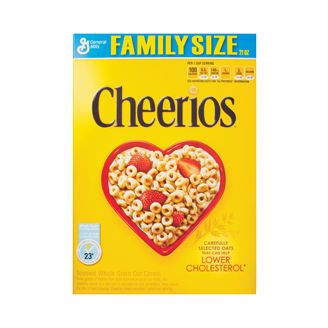
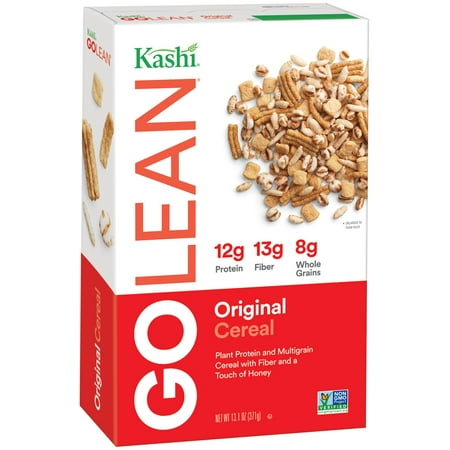
Image result for cereals Image result for kashi 

NAVIGATING THE CEREAL AISLE
Do you ever feel overwhelmed when you walk down the cereal aisle? There are so many different products and brands to choose from, which all have different nutrient contents, it can make your head spin. But, there are key things to look for in the nutrition facts panel and ingredients list that will help you pick the best breakfast.

SUGAR 
Cereals can have hidden sources of sugar, so look at the Nutrition Facts to see how much total sugar and added sugar is in each serving. For cereal, the goal is 7 grams or less per serving (Under 16 grams if there is dried fruit in the cereal). For less added sugar, buy unsweetened cereals and sweeten them with fruit; you’ll get that great sweet taste while adding more nutrients to your breakfast!

WHOLE GRAINS
Half of the grains we eat each day should be whole grains. If you look at the ingredients list, whole grains should be the first ingredient. This means that along with getting part of your whole grain recommendation for the day, you will also be getting fiber, extra protein, and even more vitamins and minerals that are found in the whole grain. Multigrain does not mean that it is whole grain, some manufacturers use this to entice shoppers to buy their cereal by seeing nuts and seeds on the product, when it is actually not whole grain at all.

FIBER
Fiber is what helps make us feel full and stay full between meals, as well as acts as a digestive aid. Fiber is found in the bran portion of a grain, making it commonly found in whole grain items. Strive for at least 3 grams of fiber per serving in your cereal. In order for the cereal to be marketed as high in fiber, it has to have at least 5 grams of fiber per servings. Most cereals will advertise on the box that it is high in fiber, too!

Remember to use low-fat or fat free milk on your cereal, too! You'll get the 9 essential nutrients that milk has to offer as well as the benefits of the cereal in one breakfast!

Tuesday, 20 March 2018

Arugula-Mint Pesto

Pesto has always been one of my favorite sauces. You can put it on pasta, throw it on a bun for a burger, top steak with it, or even make a pizza with it!  This weekend, I was flipping through Cooking Light Magazine and saw a sauce page dedicated to versatile, easy to make sauces, and Arugula Mint Pesto was one of them! I whipped it up last night after dinner and tried it on pasta tonight, and it was so good! The peppery taste from the arugula was evenly balanced with the lemon zest and juice. Here's the recipe, give it a try!


Ingredients

  • 5 cups loosely packed arugula
  • 1/2 cup fresh mint
  • 1/4 cup toasted almonds
  • 1/2 ounce grated Parmigiano-Reggiano cheese (about 2 Tbsp.)
  • 2 garlic cloves
  • 1 teaspoon lemon zest
  • 2 tablespoons fresh lemon juice
  • 3/4 teaspoon kosher salt
  • 1/3 cup extra-virgin olive oil
  • 2 tablespoons warm water
Pulse loosely packed arugula, fresh mint, toasted almonds, grated Parmigiano-Reggiano cheese (about 2 Tbsp.), garlic cloves, lemon zest, fresh lemon juice, and kosher salt in a food processor until finely chopped. With processor running, slowly drizzle in extra-virgin olive oil. Add warm water; process until blended.

Monday, 5 March 2018

Go Further with Food

National Nutrition Month 2018
March is National Nutrition Month and this year's theme is "Go Further with Food". The message with this theme is to get the most out of your food and to reduce food waste. There are several ways we can go further with food, let's learn more!

Prep Meals in Advance
Prepping a weeks worth of meals on the weekend is one way you can reduce food waste and help you save time during the week! You can make a large batch of a recipe on Sunday afternoon for lunch for the week. Separate and portion out each serving, reheat and eat! If you like to make a new meal every night for dinner, plan a leftover night once a week to clean out the fridge and have the leftovers to stop food waste.

Store Food Correctly
Storing your food correctly can help reduce food waste, as well as promote food safety! Some ideas you can do are: label and date all food in the freezer and eat the oldest first, freezing fruits or vegetables that you aren't going to use right away to prevent them from spoiling, and check what you have hiding in your fridge or pantry before you go buying more food. Having your fridge and freezer at the right temperature can help your food last longer too! Your fridge should be between 36-40 degrees and the freezer should be between -10-0 degrees.

Shop Locally and In-Season
Buy your fruits and vegetables from a farmers market for locally grown, and in season options. If you buy fruits or vegetables out of season, they travel a long way to get to the store and there's no guarantee that the are fresh! Buying fresh and local fruits and vegetables will be cheaper and tend to last longer too! Buying locally keeps your money in the area too!


Last week, at my Clinical rotation, the other intern and I set up a table in the cafeteria during lunch time for National Nutrition Month! We sampled a heart healthy kale salad, gave out nutrition tip cards, and talked to employees and visitors about the importance of nutrition. Here's our table!!

Monday, 12 February 2018

How to: Read a Food Label

I recently spoke at a Cardiac Rehab program at the hospital I am an intern at about reading the nutrition label on products. In total, over 2 days, I gave this education piece 8 times!! I went home at the end of both days and didn't want to talk any more because I had talked so much all day. Label reading is an important skill that can help you on your journey to health, so I figured that would put my little education piece into writing so you all can learn a little label reading too! Here's a sample label to reference as we go through the pieces!
Updated Nutrition Facts
Let's start at the top! The number of servings in the container, or bag, or box, is at the top. This means that in this whole box, there are 8 servings and all the information below is based off of one of those servings. Below that we have the serving size, the nutritional information is highly reliant on the serving size. If you wanted more than 2/3 cup, then the nutrition info would have to be increased, and if you wanted less, then the total calories and nutrients will be less than what's listed. 

Now we get to the heart of the information! The calorie content per 2/3c serving is listed in bold, large print so your eye is drawn to it. In our 2/3c, we will get 230 calories. 

Below that is the fat content per serving. In our 2/3c, we will get 8 grams of fat. There are 4 different types of fat, polyunsaturated and monounsaturated fats are the heart healthy fats, while saturated and trans fats are the ones that can cause severe health problems can clog the arteries when eaten in excess. By law, companies do not have to say that there is trans fat in their product if there is less than .5 grams per serving. So, really look at what you're eating is important; if its processed and high in fat, it might have some hidden trans fat. Trans fat is chemically engineered and added to foods to help preserve their flavor and extend their shelf-life. 

% Daily Values are kind of confusing until they are explained! You can see the % Daily Values on the right side of label and they are different for each nutrient. These % are based on a 2000 calorie diet, however most of us don't need 2000 calories a day unless you are very active. Within those 2000 calories, there are certain goals or limits put on each of the nutrients. For example, 80 grams of fat is what the goal, so one serving will provide you 10% of what you need of fat for the day. But because everyone's calories needs are different and most of the time lower than 2000 calories, the percents can be skewed. So that is something to be conscious of. The % Daily Value can 
also be used as part of the product marketing tool. If the % is 20 or above, it can be labeled as a good source of what ever nutrient it is, or high in what ever nutrient. If the % is 5 of lower, it can be labeled as low in, or not a good source of. This product has 45% of the daily value of iron, so it could be labeled as a good source of iron.

Cholesterol is what can really throw someone off. Dietary Cholesterol DOES NOT affect blood cholesterol. Yes, you read that right! What does affect blood cholesterol is
saturated fat. Cholesterol is the carrying molecule of fat, so when a product is high in saturated fat, then it will be high in cholesterol. Its very important to look at the saturated fat content of foods.

Sodium content is also very important when looking at your foods. The current American Heart Association recommendation for sodium is 2000mg/day, which is a teaspoon and a half. However, the average American diet has between 3500mg-5000mg a day of sodium. Excess sodium in your diet can cause swelling, heart disease, and many more issues. We can cut sodium in our diets by rinsing canned vegetables, buying no added salt or no salt added products, and tasting your foods before salting them or seasoning your foods.

Carbohydrates are our main energy source in our diets, so it's especially important to pay attention to when looking at your foods. Starchy foods like pasta, bread, rice and potatoes are naturally high in carbohydrates, so don't be alarmed when you see higher carb content in those items. Also look at the amount of added sugar in the product too; there's a difference between naturally occurring sugar and added sugar. Apples have naturally occurring sugar, but candy and sugary cereals have added sugar to enhance the flavor. Look at your product, look at the added sugar content, and decide if you think there should be added sugar in it. Fiber also technically falls under the carbohydrate classification, but fiber does not get digested so therefore it doesn't provide extra calories. Fiber helps keep food moving through the GI tract.

Protein is the one nutrient that does not have a % daily value and that's because everyone's protein needs are different based on gender, weight, height, activity, age and so on. One realistic goal could be .5 grams of protein per pound of body weight. So if you weight 125 pounds, you should aim for 75 grams of protein if you are active and athletic. If you don't work out too often, then I would suggest .3 grams of protein per 1 pound of weight.

The micronutrients at the bottom of the label are important to pay attention to too! Aim for the micronutrients to have at least 20% of the Daily value.

Lastly, when reading the nutrition label you should look at the ingredients lists. The ingredients are listed from highest amount in the product to least. Whole grain/whole wheat products should have Whole Wheat Flour as the first ingredient. Don't be fooled by multigrain products, most of the time they are not whole wheat and just have seeds and nuts added in to look healthier!


Reading the nutrition label is key to knowing what you're putting in your body. After reading this post, you're now able to look at an item and know if it's good for you or if it isn't! 

Source: http://www.eatright.org/resource/food/nutrition/nutrition-facts-and-food-labels/the-basics-of-the-nutrition-facts-panel
Wednesday, 7 February 2018

Nutrition Hot Topics: Supplements

Image result for supplements


Supplements

I am asked all the time by friends, family, and people that I don't really know if I think they should be taking a supplement. This puts myself, as well as other nutrition students and RDNs in a tough spot. There a thousands of supplements and brand out there with outrageous claims that they can help you build a pound of muscle over night, or lose 10 pounds in 1 week. All of these claims sound great, but sadly, they aren't true. There's a reason why there's so many supplement brands out there and I'm here to start the myth busting!


What is a supplement?

A supplement is defined as something that is taken to aid or enhance the effects of something else. Types of supplements are vitamins and minerals, protein powders, creatine, pre-workout, fat burners, herbs and other products like St. John's Wart. All of these things, yes vitamins and minerals included, are not regulated. By law, supplements do not go through FDA screening and regulation to see if they actually contain what they say they contain, if the amounts are correct, if the ingredients are safe, and if their claims are true. Some brands are more reliable than others.The more mainstream brands like Centrum Silver, One-a-Days, and Nature Made, the more trustworthy they tend to be.

Should you take a multivitamin?

In short, yes. If you are eating a varied diet, getting lots of fruits and vegetables in with meals, then you are most likely getting the recommended daily allowance of vitamins. But, some are harder to get than others. Vitamin D is one that American's are commonly deficient in because unless you live in the southwest or in Florida, most of the year we don't see lots of sunshine. So a multivitamin would make sure that you are getting the appropriate amount of Vitamin D that you need. It is okay to take a multivitamin even if you do have a varied diet. The water soluble vitamins, like the B vitamins, are regulated in our bodies and our bodies only take what we need and the rest is excreted out. With the fat soluble vitamins, they are stored and transferred in fat cells, so they are kept in our bodies for a while but still hard to reach toxic levels, unless you're taking an extreme amount. 

When looking to buy a multivitamin, go for one that is a multivitamin plus minerals. This will help aid in reducing inflammation, preventing disease, and promoting recovery form injury. 

What about all the other types of supplements?

If you really want to take supplements for exercise, like protein powders, creatine, fat burners, pre-workouts, etc, do your research. If you're an athlete, this is extremely important. Whether you play in college, high school, or professionally, you can be subjected to drug testing. If you they find a substance in your urine or blood that is not verified or okay'd by the NSF, they you could be benched or kicked off the team, here is the website to find out if you're supplements are okay to use http://www.nsfsport.com/certified-products/. You can also look on the bottle or box to see if it has the NSF logo, which means it has been tested and approved for use, meaning it has everything it says it does in it and it doesn't contain anything that it shouldn't. 

Do you need a sports supplement?

If you wanted try any type of supplement, the only kind I would recommend would be a protein powder, but only in certain cases. Chocolate milk is the perfect recovery drink with a 3:1 carbs to protein ratio, it has simple carbs that are broken down easily by the body to replenish stores and the protein to help build muscle and lean body tissue. Pair that with a granola bar or half a peanut butter sandwich and you are refueled and on your way to recovery. Protein powder's are good when you're on the run, need a good amount of protein after, trying to gain weight/muscle, or just want a different flavor. You do not need more than 30 grams of protein after a workout though, so if you're trying to get a 50 gram protein supplement, your body is either going to excrete the excess protein out or store it as fat. Fat burners are a lot of talk and have little science behind whether they work or not, it's most likely the placebo effect, but more research needs to be done. Most fat burners are high doses of caffeine because caffeine has been proven to aid in increasing metabolism. The same goes for pre-workout, its caffeine. So, instead of buying a $50  jar of caffeine powder with other mystery ingredients, have a cup of coffee!

Want more information about supplements? Check out the Academy of Nutrition and Dietetics

http://www.eatright.org/resource/food/vitamins-and-supplements/dietary-supplements/supplements-and-ergogenic-aids-for-athletes

Wednesday, 31 January 2018

Delicious Cheesesteak Cups!

Pennsylvanians love their cheese steak! I've seen foot-long cheese steaks, cheese steak fries, cheese steak pizza, you name it! So when my boyfriend came to visit this past weekend and was craving a cheese steak, I found this awesome recipe on Facebook for Bell Pepper Cheese Steak Cups and knew we had to make it. They are a lower carbohydrate option for someone who doesn't want a very heavy meal, but still wants tons of flavor and protein. You'll be able to whip this up on a busy weeknight in no time. Best part, it hits all the food groups so you won't need to come up with any sides! 


Here's how to make them!

INGREDIENTS

  • 4 bell peppers, halved
  • 1 tbsp. vegetable oil
  • 1 1/2 lb. sirloin steak, thinly sliced
  • 1 large onion, sliced
  • 16 oz.  mushrooms
  • kosher salt
  • Freshly ground black pepper
  • 16 slices provolone

DIRECTIONS

  1. Preheat oven to 325ยบ. Place peppers in a large baking dish and bake until tender, 20 minutes.
  2. Meanwhile, in a large skillet over medium-high heat, heat oil. Add steak and cook about 1 minute per side. Set aside.
  3. Add onions and mushrooms to skillet and season with salt and pepper. Return steak to skillet and stir to combine.
  4. Add provolone to bottom of peppers and top with steak mixture. Top with another piece of provolone and broil, 3 minutes.
  5. Serve hot.


Sunday, 14 January 2018

Breakfast Project

Through my internship  as a health professional at American Dairy Association North East, I was given a project by one of the dietitians to  make  a bulletin board in a box. The whole concept and idea for  this project came from thinking about the bulletin boards that are outside of nurses offices at schools, and our initiative to get breakfast in the classroom of all schools to ensure that kids are getting a nutritionally sound start to their day.

This project started with a lot of research and, actually, another project having to do with breakfast after the bell research. I read a few research studies and found that kids that get free breakfast in the classroom, like schools in New York  City, have seen increased attendance from students, healthier BMIs, better overall nutrition, increased participation. Thousands of kids go to school hungry every  morning because they didn't  have breakfast, and go to the nurses office with hunger pains, tiredness and lack of focus. All these symptoms could be prevented by providing breakfast in the classroom.

The research showed that students who skip breakfast tend to have a higher BMI, due to eating large amounts of food later in the day to make up for their morning hunger. Kids who had breakfast at home, and who also had breakfast in school, showed a healthy weight gain with growing and had less incidence of obesity. Kids are supposed to be growing  and getting bigger every day, and they cannot do  that in a healthy matter without breakfast.

The Health Professional team and I brainstormed on how we wanted this project to look and what messages we wanted to relay, and employed the help of a graphic designer and printer to make this vision come true. Our title to the bulletin board is "Is your Breakfast an A+"! We incorporated a breakfast equation that the nurses can design themselves, that includes a whole grain, a fruit and a serving of dairy, with multiple different outcomes like increased attendance, better participation, better student nutrition. The nurses can make their own equation with our provided foods!

The finish products came into the office this week before they were to be handed out at School Nurses conferences, and I  got to take a look! I absolutely love the way that this project came out and cannot wait to see how the nurses assemble their bulletin boards!

Here is what the finished project looks like!