Showing posts with label natural. Show all posts

Friday, 11 November 2016

Waist Circumference and Your Health


Some people are very fixated on what the scale says. They believe that if they are a certain weight, that they are unhealthy and that they are worthless and need a change. A scale is just a machine. It measures the force of gravity you exert on the earth. A number does not define you. Yes, I believe that everyone should live healthy and active lifestyles, but you don't need to tie a number to your health. I already know that when I am a practicing dietitian, I will not be weighing my patients unless it is absolutely necessary. People fear going to the doctor because they do not want to know what they weigh or what a doctor will say about their weight. We can make changes without tying a number to ourselves. By simply focusing on our eating and health habits, we can achieve goals. I personally do not step on the scale unless I absolutely need to. A better way to gauge health is to do waist circumference. Women should strive to have a waist circumference of 35 inches at most and men should have a waist circumference of 40 inches at most. Waist circumference can be a good predictor for being overweight and obese, and can help dietitians predict if you more likely to develop a disease. There are two main types of adiposity, Central adiposity and Gynoid adipostiy. Central adipostity is excessive amounts of fat around the abdominal area. When there is a significant amount of fat in the abdominal region, there is a significantly higher risk of cardiovascular disease, diabetes, and hypertension. Less harmful but still bad is Gynoid adipostiy. This is where fat deposits around the hips and glutes; less harmful but still an issue. These two types help dietitians and physicians to describe where fat is gathering and storing on the body. Gauging waist circumference and adipostiy type can help you and a dietitian figure out an action plan to achieve your goals and become healthier.  


Want to figure out how healthy you are without stepping on the scale? Try measuring your waist circumference and figure out where you stand! Need help reaching your goals and making a change? Message me and we can get you on the right track!

Sunday, 7 August 2016

How Not to Over Indulge at Weekend Gatherings


The summer is a time of many family gatherings and cook-outs with friends; at least it is if you have a big family like mine. At such gatherings, there is normally a vast variety of appetizers, potato and pasta salads, and loads and loads of desserts. My family loves to cook, and of course, we love to eat! I love and hate going to the parties sometimes because I know I will have a lot of fun seeing my family and hanging out, but most of the time I over indulge. However, I have gotten better at choosing the most nutritious foods to eat there, without feeling like crap after! And that is what I want to help you with now.

First, lets start with the appetizer table

I love appetizers, however, they can be meal spoilers. When you eat too much of the snacky foods, you won't have enough room for the main course or dessert, but will still over-stuff yourself. When conquering the appetizer table I recommend staying away from eating too much of the baked, decadent dips with chips and greasy snacks that will leave feeling sticky and too full, and try to munch on mixed nuts, vegetable and hummus tray, fresh salsa and fruit. All of these snacks, and ones like them. will provide protein. This will satisfy some of your hunger, but leave room for the main dishes while providing vitamins and minerals which our body needs for growth and repair, and heart-healthy fats that can protect against heart disease and other issues. Stick with the colorful appetizers and your body will thank you!

The main dishes

This is where it can get tricky sometimes, but it doesn't have to be! When selecting which meat you're going to enjoy, go for what's grilled and have the sauces on the side. When the sauce is on the side, you can control how much you're having, rather than having so much sauce so that it ends up on your face! Grilling the meat helps to drain the fat off of it so you're cutting the calorie and fat content without sacrificing flavor. Pasta salad and potato salad can either be really nutritious, or packed with fat. Go for the salads that have an oil based dressing, rather than mayo or cream based. The oil in the dressing gives us healthy fats, and allows for more flavor of the ingredients to shine through. Lastly, green salads. Choose a salad that is made with dark leafy greens, not iceberg lettuce. Iceberg lettuce has no nutritional value, whereas dark leafy greens are full of vitamins and mineral like iron and B vitamins. Pick the dressings that are oil based to ensure you're having healthy fats and not saturated fat, and put the dressing on yourself! Not everyone likes salads drenched in ranch, put a little on yourself and if you need more than add accordingly.

Lastly, dessert time!

Just when you're getting too full to eat, the dessert table is brought out and suddenly, everyone's got a little extra room for something sweet. Try to choose something that has a variety of natural color (I'm not talking about a 3 layer cake with rainbow frosting!!). Make your own little parfait with fresh fruit, if available, and yogurt or pudding. Protein and antioxidant packed! Or, go for sorbet if offered. Its mostly water, fruit juice, sugar and maybe fruit chunks. Its a great way to cool off on a hot afternoon, without feeling too full afterwards.

You don't have to leave the party feeling guilty, too full, or with a food baby. Remember to treat yourself and have fun, but be conscious of what you're having!

-Emily


Tuesday, 26 April 2016

Drink Up!


With summer and warm weather approaching soon, well hopefully, hydration becomes even more important for everyone. Don't get me wrong, you need to be hydrated all the time, but particularly in the summer, it gets harder for people to remain hydrated and feeling good. Dehydration cannot only make up feel sluggish or tired, but can also have negative effects on our bodies and its functions.

The Institute of Medicine suggests that women should consume about 91 ounces of water per day, or about 11 8oz glasses per day, and men should be drinking about 125 ounces, or 16 8oz glasses of water per day. Instead of counting all those ounces or glasses, your urine should be pale yellow (we learned this in my life cycle nutrition class). That seems like a lot of water, but you can get some of this water through the foods you eat! Vegetables and fruits are very high in water and are good sources of vitamins and minerals for our diet too. Especially fruits like watermelons and strawberries.

Our bodies are about 70% water, and many of the processes and reactions that happen in the body need water to occur. When we don't get enough water, we may feel dehydrated. This brings along symptoms like headaches, dry mouth, muscle cramps (especially in athletes), nausea and vomiting, heart palpitations, and lightheadedness. This is just the stuff we can feel, here is some of the stuff that happens in our bodies that we cannot always feel or know what is going on-problems with digesting foods, the inability to regulate body temperature, kidney problems, swelling and bloating, problems with blood flow, and constipation. All of these can really hurt someone's body if they do not get enough water. But just by filling up a water bottle and sipping on it, refilling it and repeating, can prevent all of these problem!

If you want to add some flavor to your water, add some crystal light or another flavoring. You still get all the water and its benefits, with a little added taste. So drink up!


Thursday, 21 April 2016

There's that much sugar is that?!

I have fallen victim to the marketing of reduced fat or fat free food products as better for you. It wasn't until I came to college that I realized that I was making a wrong decision for my health.

Added sugar is everywhere. In foods like cereals, granola bars, yogurt, and especially in beverages. Added sugar can be what breaks someone's every day diet. When fat is taken out of something, like reduced or fat free ice cream, potato chips, prepared and packaged foods, something needs to be put back in to replace the flavor that is lost when the fat is reduced or taken out. Therefore, sugar is added in to make up for that loss in flavor. The same is the case for sodium. When fat is taken out or reduced, sugar and salt are put in to give back some flavor to the food.

All the added sugar in everything can be partially to blame for the increasing obesity epidemic. Especially in sodas. The added sugar makes us pack on the pounds, and can lead to illness and disease like diabetes, heart disease, hypertension, and obesity. But that sugar just tastes so good! And that's what the big companies want, for us to like the taste, and also associate drinking sugar drinks like soda with happy times and occasions. I did not drink too much soda when I was younger. It was always a treat in my house. We could have it at partys and on vacations, but other than that, it was not a popular drink to have.  I will occasionally have a soda now and again, but not on a regular basis.

Soft drink companies have tried to train the public to correlate drinking soda with feeling happy and doing things fun. This is how they get people to repeatedly buy it.
We watched a video this past week in my life cycle nutrition class that really caught my attention, and I want to share it with you. It is about the unhappy truth of soda and uses a similar marketing tool that Coca-Cola uses. Here is the link- https://www.youtube.com/watch?v=myxwCEGcBYc


Also I wanted to share just how much sugar is in some of the most popular beverages and sodas

One can of Coke has 12 teaspoons of sugar

One can of Sprite has 9 teaspoons of sugar
 One bottle of mountain dew has 19 teaspoons of sugar

One can of an energy drink has 16 teaspoons of sugar
One bottle of Snapple has 11.5 teaspoons of sugar

One bottle of Orange Juice has 12 teaspoons of sugar
Lastly, One can of Arizona Iced tea has 18 grams of sugar


So next time you reach for a soda or sugar beverage, just remember how much sugar may be in there!

Tuesday, 5 April 2016

Protein Power


Protein is one of the 4 macronutrients, along with carbohydrates, fat and water, that are very vital to life and our ability to move and function. However, it is a problem for many people to get enough protein in their diets daily. The protein that we take in in our diet is important for  muscle development, building up bones and strength, producing antibodies to prevent illness and disease, and to promote growth of strong hair and nails. The average adult consuming 2000 calories a day, should be getting 10-25% of the daily calorie goal from protein. That translates to 200-500 calories, or 50g-124g of protein daily. 124 grams is a lot of protein. A smaller and more personalized protein goal can be found using a simple math equation. For example, lets use a 130lb individual. First, you must divide your weight by 2.2 to find out how many kilograms you are. So, for the example that would be 59kg. Then you will multiply 59kg x .8g/kg of protein, which equals 47 grams of  protein a day. Then, multiply 59kg x 1.1g/kg, which equals 65 grams of protein a day. 47-65grams of protein is a much smaller, and more personalized assessment of someone's protein needs.

Now that you have calculated what your proteins needs are, its time to decide what are the best food choices are to fulfill these needs! Here are a few ideas of protein rich snacks to incorporate into your day to make sure you are getting enough protein in your diet.

- One 8 oz glass of chocolate milk provides about 150 calories and 8 grams of protein per cup


- 1/4 cup of raw almonds providing about 150 calories, healthy fats and 5.4 grams of protein

- 6 oz of greek yogurt providing 130 calories and 16 grams of protein

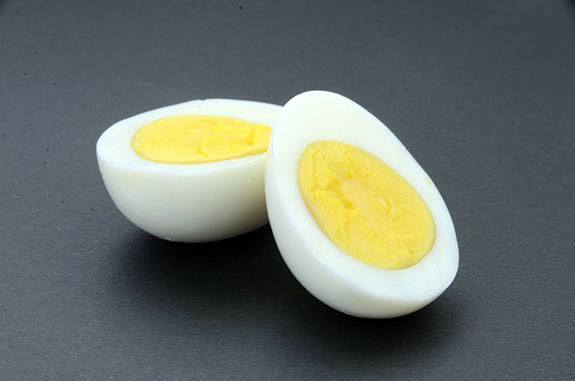
- Two hard boiled eggs providing about 160 calories and 12 grams of protein (eggs are the most purest form of protein with the least amount of calories!)
How to hard Boil Eggs recipe
- Two slices of roasted turkey deli meat providing 44 calories and 7.2 grams  of protein rolled with one slice of provolone  which is about 98 calories and  7.2 grams of protein equaling 142 calories, 14.4 grams protein total!
- 3/4 cup of cooked edamame providing 150 calories and 12 grams of protein!

- One Luna granola bar has about 180 calories and about 8-9 grams of protein

- 3 oz of tuna on whole grain crackers provides 165 calories and 16 grams of protein

Choose your snacks wisely and go for a high protein option keeping you fuller longer!


Monday, 4 April 2016

Portion Distortion Inforgraphic

For my nutrition education class and presentation I talked about in my last post, I had to make an infographic as part of the total project. Infographics are like pamphlets or news articles that talk about specific areas of interest, not just health related. So I did my infographic on portion distortion, what an actual portion size is and a little bit of obesity statistics! I used Canva, which is a free website where you can design presentation, posters, Facebook cover pictures and even blog stuff. Very easy to use and a lot of free content, as well as paid for content.  Here is the finished project!

Portion distortion Do you know what an actual portion size is? -2 i...

Also, I am open to taking suggestions about future blog posts and areas of interest within nutrition. Just leave a comment on here or on facebook and I will look into it!


Tuesday, 16 February 2016

Knowing Your Labels

One of the biggest issues in the nutrition field  is that not many people know what all the nutrition jargon means on the packaging of the foods they buy and eat. I have read multiple articles about this, and with each article I read, I learn something new about what different things mean on these labels. Like what the different is between all natural and organic. Or antibiotic free or hormone free. Here's a few labels and their meanings I think are important to know and to help you know what you are buying

For meats, these are common labels and their meanings:
- American Grass Fed Certified-No antibiotics are used at all during the animals life time
- Animal Welfare Approved-No antibiotics are used for growth or disease prevention. Animals are only given antibiotics if they are sick. Welfare and hygiene are fully addressed
- Certified Humane- No antibiotics are used for growth or disease prevention, some welfare and hygiene practices are used
-No Antibiotics/Raised with no antibiotics- drugs are not used for any purpose, but if they do not have the USDA seal, then they cannot be fully relied on to be antibiotic free
-Organic- Animals have not been given antibiotics, and sick animals that have been treated with antibiotics, cannot be considered organic. They can be given Antibiotics before they have hatched, or on the day they were born and still be considered Organic.
-Grass-Fed- not all meat that has been grass fed has been raised without antibiotics. Look for the AGA certified label stating at that they have no been raised with antibiotics
-Natural/All-Natural- Has nothing to do with antibiotics, hormones or any other drugs that may be used at all. This label just means that no artificial ingredients have been used and was minimally processed
-No hormones- Does not have anything to do with antibiotics used for growth. Pork and Chicken cannot have any hormones added to them, so whether the package is labeled with this or not, there are no hormones used or added.
- Raised without Antibiotics for growth promotion- Antibiotics are used for disease prevention and treatment
( Info obtained from Consumerreports.org)


Here are some that show up on many different labels, across many food groups along with their definitions:
-"Free of..." or "Fat Free"- only trivial amounts in each serving
- "Good Source"- has at least 10-19% of the daily value per serving
- "Less"- contains 25% of less of a nutrient or calories than the reference food
- "Light"- 1/3 less calories and 1/2 the fat
- Light in sodium" - amount of sodium in one serving has been cut in half
- "More"- contains at least 10% more of the Daily Value per serving than the normal food. Other words used to describe this are fortified, enriched, added, extra and plus
- "Reduced"- Food has been altered to have 25% less of a nutrient or calories than the normal food