Tuesday, 14 June 2016

Summer Snacking Treat- Cheese-Stuffed Pizza Pretzels

I apologize to all my readers that I have not been able to post sooner on my page, but the summer so far has been quite busy with getting ready for my internship, working about 30 hours a week at starbucks, family get togethers, and my boyfriend visiting for a few days. However, I am going to try to stay on top of this and post more in the coming weeks!

If you know me well, you know that I am a foodie. I am very adventurous in my eating and like to try a wide variety of food, even though I am going to school to be a dietitian. At family parties and eating out  with friends I often get asked "why are you eating that if you're in school to teach people how to eat healthy?", my response is always that you can eat anything in moderation and a little splurge here and there won't hurt me. One of the dishes that I like to make when I am in the food for a little splurge is Cheese-Stuffed Pizza Pretzels. I originally saw this recipe on facebook in one of the Tasty food videos and knew that my family, boyfriend and I would all enjoy it. This recipe is perfect for an appetizer at a barbecue or even as a midnight snack. Its super easy and definitely worth the calories.

Cheese Stuffed Pizza Pretzels


Yields: 3 pretzels

Ingredients:
1 (13.8-ounce) tube store-bought pizza dough
4 cups shredded mozzarella (from two 8-ounce bags)
nonstick vegetable oil spray
15 presliced pepperoni
Store-bought marinara or pizza sauce for dipping

Preparation:
Preheat oven to 425°F/220°C. Unroll the dough (it should form 15x9-inch rectangle), then cut the rectangle horizontally into three equal strips. (These will be your three pretzels.) Carefully stretch each of the strips by width and length — stretch each to about 3 inch width and about 34 inch length. Sprinkle 1 cup of cheese down the center of each dough strip. (Reserve the last 1 cup of cheese for later.) Fold the dough over the cheese, pressing to seal and rolling slightly to create 3 dough logs filled with cheese. Cover a baking sheet with foil and spray with vegetable oil. To form the pretzels, take one dough log, move it to the foil covered baking sheet, then form a circle with the ends of the log at the top of the circle. Twist the log ends around each other once and bring them down to meet the bottom of the circle. That's your pretzel shape! Repeat with the other two dough logs on the baking sheet. (Watch the video if you need help with this step.) Wrap pepperonis on the pretzels — 5-ish per pretzel — then sprinkle the remaining cup of cheese among the three pretzels. Bake 14-18 minutes until deep golden brown. Serve immediately with pizza sauce for dipping.


The video is on facebook and can be found with an easy search, unfortunately I am not able to put the link in this post. I recommend eating them right when they are still warm and stuffing a lot of cheese inside them too! Even if you are watching what you're eating, remember it is healthy to treat yourself!

Tuesday, 26 April 2016

Drink Up!


With summer and warm weather approaching soon, well hopefully, hydration becomes even more important for everyone. Don't get me wrong, you need to be hydrated all the time, but particularly in the summer, it gets harder for people to remain hydrated and feeling good. Dehydration cannot only make up feel sluggish or tired, but can also have negative effects on our bodies and its functions.

The Institute of Medicine suggests that women should consume about 91 ounces of water per day, or about 11 8oz glasses per day, and men should be drinking about 125 ounces, or 16 8oz glasses of water per day. Instead of counting all those ounces or glasses, your urine should be pale yellow (we learned this in my life cycle nutrition class). That seems like a lot of water, but you can get some of this water through the foods you eat! Vegetables and fruits are very high in water and are good sources of vitamins and minerals for our diet too. Especially fruits like watermelons and strawberries.

Our bodies are about 70% water, and many of the processes and reactions that happen in the body need water to occur. When we don't get enough water, we may feel dehydrated. This brings along symptoms like headaches, dry mouth, muscle cramps (especially in athletes), nausea and vomiting, heart palpitations, and lightheadedness. This is just the stuff we can feel, here is some of the stuff that happens in our bodies that we cannot always feel or know what is going on-problems with digesting foods, the inability to regulate body temperature, kidney problems, swelling and bloating, problems with blood flow, and constipation. All of these can really hurt someone's body if they do not get enough water. But just by filling up a water bottle and sipping on it, refilling it and repeating, can prevent all of these problem!

If you want to add some flavor to your water, add some crystal light or another flavoring. You still get all the water and its benefits, with a little added taste. So drink up!


Thursday, 21 April 2016

There's that much sugar is that?!

I have fallen victim to the marketing of reduced fat or fat free food products as better for you. It wasn't until I came to college that I realized that I was making a wrong decision for my health.

Added sugar is everywhere. In foods like cereals, granola bars, yogurt, and especially in beverages. Added sugar can be what breaks someone's every day diet. When fat is taken out of something, like reduced or fat free ice cream, potato chips, prepared and packaged foods, something needs to be put back in to replace the flavor that is lost when the fat is reduced or taken out. Therefore, sugar is added in to make up for that loss in flavor. The same is the case for sodium. When fat is taken out or reduced, sugar and salt are put in to give back some flavor to the food.

All the added sugar in everything can be partially to blame for the increasing obesity epidemic. Especially in sodas. The added sugar makes us pack on the pounds, and can lead to illness and disease like diabetes, heart disease, hypertension, and obesity. But that sugar just tastes so good! And that's what the big companies want, for us to like the taste, and also associate drinking sugar drinks like soda with happy times and occasions. I did not drink too much soda when I was younger. It was always a treat in my house. We could have it at partys and on vacations, but other than that, it was not a popular drink to have.  I will occasionally have a soda now and again, but not on a regular basis.

Soft drink companies have tried to train the public to correlate drinking soda with feeling happy and doing things fun. This is how they get people to repeatedly buy it.
We watched a video this past week in my life cycle nutrition class that really caught my attention, and I want to share it with you. It is about the unhappy truth of soda and uses a similar marketing tool that Coca-Cola uses. Here is the link- https://www.youtube.com/watch?v=myxwCEGcBYc


Also I wanted to share just how much sugar is in some of the most popular beverages and sodas

One can of Coke has 12 teaspoons of sugar

One can of Sprite has 9 teaspoons of sugar
 One bottle of mountain dew has 19 teaspoons of sugar

One can of an energy drink has 16 teaspoons of sugar
One bottle of Snapple has 11.5 teaspoons of sugar

One bottle of Orange Juice has 12 teaspoons of sugar
Lastly, One can of Arizona Iced tea has 18 grams of sugar


So next time you reach for a soda or sugar beverage, just remember how much sugar may be in there!

Tuesday, 5 April 2016

Protein Power


Protein is one of the 4 macronutrients, along with carbohydrates, fat and water, that are very vital to life and our ability to move and function. However, it is a problem for many people to get enough protein in their diets daily. The protein that we take in in our diet is important for  muscle development, building up bones and strength, producing antibodies to prevent illness and disease, and to promote growth of strong hair and nails. The average adult consuming 2000 calories a day, should be getting 10-25% of the daily calorie goal from protein. That translates to 200-500 calories, or 50g-124g of protein daily. 124 grams is a lot of protein. A smaller and more personalized protein goal can be found using a simple math equation. For example, lets use a 130lb individual. First, you must divide your weight by 2.2 to find out how many kilograms you are. So, for the example that would be 59kg. Then you will multiply 59kg x .8g/kg of protein, which equals 47 grams of  protein a day. Then, multiply 59kg x 1.1g/kg, which equals 65 grams of protein a day. 47-65grams of protein is a much smaller, and more personalized assessment of someone's protein needs.

Now that you have calculated what your proteins needs are, its time to decide what are the best food choices are to fulfill these needs! Here are a few ideas of protein rich snacks to incorporate into your day to make sure you are getting enough protein in your diet.

- One 8 oz glass of chocolate milk provides about 150 calories and 8 grams of protein per cup


- 1/4 cup of raw almonds providing about 150 calories, healthy fats and 5.4 grams of protein

- 6 oz of greek yogurt providing 130 calories and 16 grams of protein

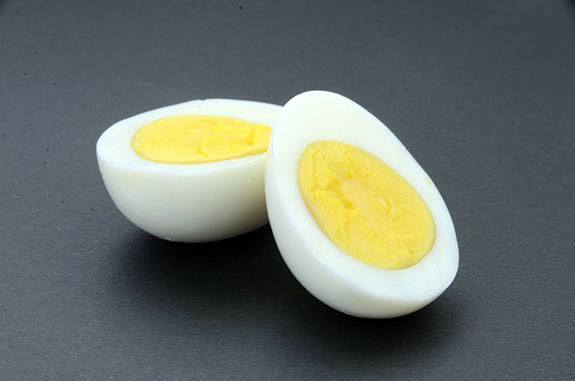
- Two hard boiled eggs providing about 160 calories and 12 grams of protein (eggs are the most purest form of protein with the least amount of calories!)
How to hard Boil Eggs recipe
- Two slices of roasted turkey deli meat providing 44 calories and 7.2 grams  of protein rolled with one slice of provolone  which is about 98 calories and  7.2 grams of protein equaling 142 calories, 14.4 grams protein total!
- 3/4 cup of cooked edamame providing 150 calories and 12 grams of protein!

- One Luna granola bar has about 180 calories and about 8-9 grams of protein

- 3 oz of tuna on whole grain crackers provides 165 calories and 16 grams of protein

Choose your snacks wisely and go for a high protein option keeping you fuller longer!


Monday, 4 April 2016

Portion Distortion Inforgraphic

For my nutrition education class and presentation I talked about in my last post, I had to make an infographic as part of the total project. Infographics are like pamphlets or news articles that talk about specific areas of interest, not just health related. So I did my infographic on portion distortion, what an actual portion size is and a little bit of obesity statistics! I used Canva, which is a free website where you can design presentation, posters, Facebook cover pictures and even blog stuff. Very easy to use and a lot of free content, as well as paid for content.  Here is the finished project!

Portion distortion Do you know what an actual portion size is? -2 i...

Also, I am open to taking suggestions about future blog posts and areas of interest within nutrition. Just leave a comment on here or on facebook and I will look into it!


Wednesday, 16 March 2016

Portion Distortion

Recently over my spring break from school I gave a presentation at one of my cousin's school about portion distortion and portion sizes. First I talked to the teachers at their morning meeting about how portion sizes have almost doubled in size over the past 20 years, then later, I talked in her classroom about the importance of eating breakfast every morning to ensure we have enough energy to learn and work hard. For my first, actual nutrition presentation as a student and a future dietitian, it went great! The adults seemed to really enjoy it and the students really learned the importance of the most important meal of the day.

Like I said, portion sizes have doubled and almost tripled in the past twenty years! No wonder so many Americans are considered overweight or obese. 58% of Americans eat out or grab a meal on the go at least once a week. And now, for the first time ever, we are spending more money at restaurants and fast food joints than in grocery stores!  The average person needs about 2000 calories a day to perform daily bodily functions, extracurricular activities and just to live. However, we eat on average about 3500 calories a day. No wonder we are such a large country. Daily caloric needs are specific to each person, but are really around 2000 calories. When we eat an excess of 500 calories a day, we gain about a pound a week. With eating 1500 extra calories a day, that adds up to 3 pounds a week! Wow!
Here are some examples of how big one portion size is considered today:
- One bagel is equal to 4 slices of bread
- The standard restaurant plate of food has 2 servings on it
- Steaks served at restaurants are actually 4-6 times the size of one serving of steak
- Restaurant portion of baked ziti is equivalent to about 3 servings of pasta
- A bakery muffin is equal to 6-8 slices of bread
- One pint of orange juice is equivalent to 3 fruit servings


With the kids I talked about the importance of eating breakfast. I had 3 sample breakfasts bags that I showed the kids (one empty signifying the 1/3 of kids who don't eat breakfast every day, one with junk food for the 1/3 of kids who do not eat a nutritious breakfast, and a nutritious and wholesome breakfast for the 1/3 of kids who do eat it), and asked what they thought about each breakfast bag. They learned that if we do not eat a proper breakfast, they will feel tried, sluggish and unfocused by the time lunch comes around. The kids were able to tell me what kind of foods belong in each food group and what they do to be healthy! This is was such a fun experience and really fit into the theme of national breakfast week last week!

Tuesday, 1 March 2016

Savor the Flavor of Eating Right!

Image result for savor the flavor of eating right


March is National Nutrition Month, and March 9th is National Registered Dietitian Nutritionist Day! the Academy of Nutrition and Dietetics is celebrating the month by kicking off a national campaign for nutrition education and information. This years campaign is focusing on making informed food choices and developing sound eating and physical activity habits.

In honor of National Nutrition Month, I thought I would share some things that a dietitian can offer you!

The highest level of nutrition counseling. Anyone can call themselves a nutritionist, but only a registered dietitian (RD) or registered dietitian nutritionist (RDN) has completed multiple layers of education and training established by the Accreditation Council for Education in Nutrition and Dietetics (ACEND). In addition to holding a bachelor's degree, an RD or RDN must fulfill a specially designed, accredited nutrition curriculum, complete an extensive supervised program of practice at a health care facility, foodservice organization or community agency and pass a rigorous registration exam. What's more, roughly half of all RDs and RDNs hold graduate degrees and many have certifications in specialized fields, such as sports, pediatric, renal, oncology or gerontological nutrition.
Personally tailored advice. When you see an RD or RDN, the last thing you'll get is one-size-fits-all diet advice. "A dietitian is like an investigator seeking to learn about your current and desired state of health," says McDaniel. "At your initial visit, expect to do a lot of talking while the dietitian does a lot of listening." After learning about your health history, favorite foods, eating and exercise habits, an RD or RDN will help you set goals and prioritize. Follow-up visits will focus on maintenance and monitoring your progress.

 Help managing chronic diseases. If you have high cholesterol, high blood pressure, diabetes or cancer it can be hard to know what to eat. "An RD [or RDN] can review your lab results with you, help you understand your condition and provide education about the nutrients that affect it," says Angela Ginn, RDN, a spokesperson for the Academy. "Then, he or she will help you create an eating plan that includes all the important nutrients that can help you manage your condition."

Guidance navigating food allergies, sensitivities and intolerances. When you suffer from conditions such as celiac disease, food allergies or lactose intolerance, it's easy to be overwhelmed by what you think you can't eat. That can translate into a boring diet and may even lead to nutrient deficiencies. An RD or RDN can teach you how to read food labels so you’ll know which ingredients to avoid and a help you find substitutions to keep your diet balanced and tasty, too.
A weight loss program that really works. Fad diets may sound like the quick ticket to weight loss, but they rarely work for very long. A registered dietitian or registered dietitian nutritionist will partner with you to develop a safe, effective weight loss plan that you can stick with for the long haul. To guide and motivate you, an RD or RDN will use creative and out-of-the-box strategies to help with meal planning, grocery shopping, food journaling and mindful eating.
(eatright.org)


If you're interested in meeting with a dietitian, you can follow this link to find an expert near you!
http://www.eatright.org/find-an-expert