Showing posts with label Dairy. Show all posts

Tuesday, 22 August 2017

The Best Starbucks Drink Picks by this RD 2 Be!

Recently, for my internship with American Dairy Association North East,  I was asked to write a blog for their Dairy Diary page on their website. The dietitian I am under thought it would be a great idea to write about my favorite drinks  at Starbucks and how to make them better for you. With a little bit of thinking, I came up with 4 of my favorite, and most ordered drinks and made them healthier!


Along with being a college senior in a nutrition and dietetics program, I am also a part-time Barista at Starbucks. Through my 2-and-a-half-year tenure there and my nutrition classes, I have found the best drinks for health-conscious customers.

These drinks are high in protein, with vitamins and minerals that help your body stay strong and healthy. From the vast possibilities of drinks at Starbucks (and believe me, there are THOUSANDS of combinations and options!), I have come up with four of my favorite good-for-you drinks.

The Smoothie

Everyone knows the Frappuccino, but Starbucks offers another type of frozen blended drink; smoothies! They are available in Strawberry or Chocolate. Both smoothies come standard with 2% milk, a banana, ice, and whey protein/fiber powder.

My favorite of these two smoothies is the Strawberry! However, I like to change up the recipe a bit. Instead of using 2% milk, I ask for it to be made with fat-free skim milk. Whichever your preference, skim or 2% milk, all milk has 9 essential vitamins and minerals necessary to keep us healthy and our bones and teeth strong. The other change I like to make is asking for an extra scoop of the whey protein/fiber powder.

The standard recipe comes with 2 scoops, but after an intense workout at the gym, the extra scoop of whey protein/fiber powder, with 6 grams of protein, helps me reach my protein goal for a post workout recovery snack. The extra gram of fiber also helps with digestion, all the more reason to ask for an extra scoop!

The Frappuccino

One of Starbucks most popular items is the Frappuccino. There are so many different flavors and combinations available. Just when I thought I’ve seen it all (like the Butterbeer or Fruity Pebbles Frappuccino off the secret menu), a new one is created.

Frappuccino’s can be made with or without the frap roast. This is a coffee concentrate that adds the flavor of coffee to your beverage. It doesn’t add much caffeine, so ask for an extra shot of expresso if you’re in need of a boost but want a Frappuccino.

Frappuccino’s are usually made with whole milk, which is one of the biggest contributors to the amount of fat in this drink. Don’t think about removing the milk all together and going with a non-dairy imposter! Instead, ask for it to be made with skim or 2% milk to cut down on the fat, while also getting the 9 essential vitamins and minerals. You can also ask for protein powder to be added to the Frappuccino, which will make your drink thicker and taste more like a milkshake!

Lastly, all Frappuccino’s  are made with Frap base. This is what makes the Frappuccino smooth and easy to blend. There are three types of bases, cream base for Frappuccino’s that do not have coffee, coffee base for those made with coffee, and the light base for light Frappuccino’s that are lower in added sugar. Ask for your Frappuccino to be made with light base to cut the amount of added sugar.

Lattes

Lattes are another staple at Starbucks. You can get a plain latte with no sweetener or flavor added, or one of the specialty lattes, like a Caramel Macchiato. All lattes come with 2% milk, but if you ask for skim or whole milk, they will gladly accommodate your preferences. Stick with real dairy instead of any milk alternatives for a healthful drink with lots of protein.

If you’re looking for a flavored beverage, ask for the sugar free syrups like mocha, vanilla and cinnamon dolce. They have the same great taste without the added sugar and calories.

Iced Teas

We brew four different types of tea daily: Black Tea, Green Tea, White Tea, and Passion Tango Tea. The caffeine free options are White Tea and Passion Tango Tea. When ordering your tea, ask for it to be unsweetened.

A standard ice tea comes sweetened with liquid cane sugar, but if you’re watching calories and added sugar levels, you can ask for it to be unsweetened. Or, if you like the taste of sweet tea, ask for less pumps of liquid cane sugar.

With all the options at Starbucks, it’s easy to get healthier versions of your favorite drinks. Go with one of my picks – or create your own!

Want to know the Nutrition Facts of your favorite Starbucks drink, or a drink you created? Head over to Starbucks.com, click menu, then go under the Nutrition tab and select Drink Nutrition. From there you can find the base beverage you had, and add all the customizations you made to find out the Nutrition Facts for your beverage. 


Monday, 27 March 2017

Gut Health and Dairy!

Last week I attended a seminar put on by the American Dairy Association North East at my university. Every year they sponsor a speaker to come and talk about hot nutrition topics and how dairy is tied in with them as well. Topics in years past have been Sports Nutrition and Farming and Agriculture. This year's topic was Gut Health and Dairy. Before attending this seminar, I knew very little about the microbiome, probiotics and prebiotics; but after this session my knowledge and interest has grown exponentially. So, this week I decided that I wanted to share a little bit of this new knowledge with you!

Let's start with the Microbiome
- There are 10-100 trillion microbial cells in the skin, gut, mouth and feces. These cells have differ from person to person, and can vary depending on what environment we live in, as well as what type of environment the cells live in. Cells that live in the gut and are constantly exposed to gastric acids and juices are different from those that live on the skin or in the mouth. We actually get some of these  microbial cells from our mothers when we are born, and there are 3 points within our lives in which the microbiome changes. First, when we start being breast fed, second is when we first develop a sickness that requires an antibiotic, and lastly is when we begin to eat solid foods. Some other things that can effect the gut microbiome is diet, exercise, stress, where you live, gender, age, and whether or not if you have a pet.

Microbiome and Health
- Studies have been able to show a connection between obesity, cognitive function, immune health, autoimmune disease, diabetes, gastrointestinal diseases, and the microbiome. One study showed that those who are obese have a significantly smaller amount of microbiomes in the gut than those who are at a healthy weight. They put the overweight people on a diet high in fiber and probiotics and saw that they experienced a loss of weight, as well as a more diverse microbiome. Another point I found interesting was that a study was done with children who were genetically at risk for developing Type 1 Diabetes. The researcher followed these children for 3 years and tested their mircobiome weekly for changes. After 3 years, 4 of the 33 children followed developed Type 1 Diabetes. The researcher saw a trend in the children that developed diabetes, they saw that one year before the onset of diabetes, there was a significant change in the microbiome which could help them predict the development of diabetes.

What are Probiotics?
- Probiotics are live cultures intended to have health benefits. Probiotics are part of the microbiome which can help with digestion, inflammation and disease prevention, by eating foods with probiotics we can make our microbiome more diverse.

What are Prebiotics?
- Prebiotics feed probiotics. They have been shown to be able to reduce inflammation, reduce diarrhea associated with antibiotic use, and lower the risk of cardiovascular disease.

Where can we get prebiotics and probiotics?
- Dairy is a great source of pre and probiotics, yogurt being one of the best of them. Kefir (shown above), which is a cultured milk product also is a great source of probiotics (shown to have 150-950 billion different probiotics) . It produced fewer symptoms of lactose intolerance than normal milk does, while containing the same amount of lactose. This is because Kefir contains cultures with the lactase enzyme in them. Some other sources of pre and probiotics are fermented foods, fruits and vegetables, kimchi, saurerkraut, miso, kombucha and tempeh


Next time you're at the grocery store in the dairy aisle, check the yogurt container and see if it says "Contains live cultures", if so, you're helping to increase and diversify your microbiome!

Sunday, 22 January 2017

Raise a Glass!

There are plenty of options for milk alternatives out there on the market, but do they stack up to the real thing? You may select an alternative based on taste, preference, nutrient content, or health reasons. But an alternative may not be the best for you and your body! I support you and your decision on what kind of milk or altnerative you want to drink. I am just here to clear the air between the differences and help you make a more knowledgeable decision for your life and health.

Let's dive in!

Skim Milk- In just one 8 oz glass of milk, there's only 80 calories! Within those 80 calories, there's no fat at all, less than 5 mg of cholesterol, 12 g of carbohydrates, 8 grams of protein, 30% of the daily value of calcium and 25% of the daily value of Vitamin D! Just one small glass of milk packs a good punch of nutrients! Nothing needed to be added into milk in order to make it like this, its all nautral!


Let's compare it to 8 oz of Soy Milk
One 8 oz glass has 110 calories (thats 30 more than a glass of skim milk). There's 2.5g of fat, 15 g of carbs, 5g of protein, and vitamins that are added into the beverage to add some nutrient content. This is the ingredient list for this vanilla soy milk -
  • Organic soymilk (filtered water, whole organic soybeans)
  • Brown rice sweetener (filtered water, brown rice)
  • Natural vanilla flavor with other natural flavors
  • Tricalcium phosphate
  • Sea salt
  • Carrageenan
  • Vitamin A palmitate
  • Vitamin D2 


Let's look at Almond Milk
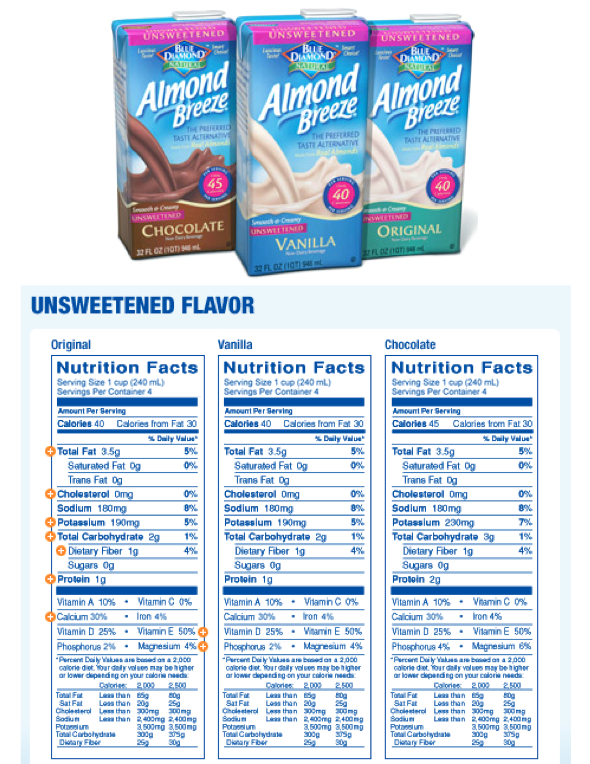
 It has only 30 calories in an 8 oz glass of the unsweetened variety, but it has 3.5g of fat, 3g of carbohydrates and only 2g, at most, of protein.  There is a significantly less amount of nutrients in almond milk compared to skim milk!

Let's look at Coconut milk!
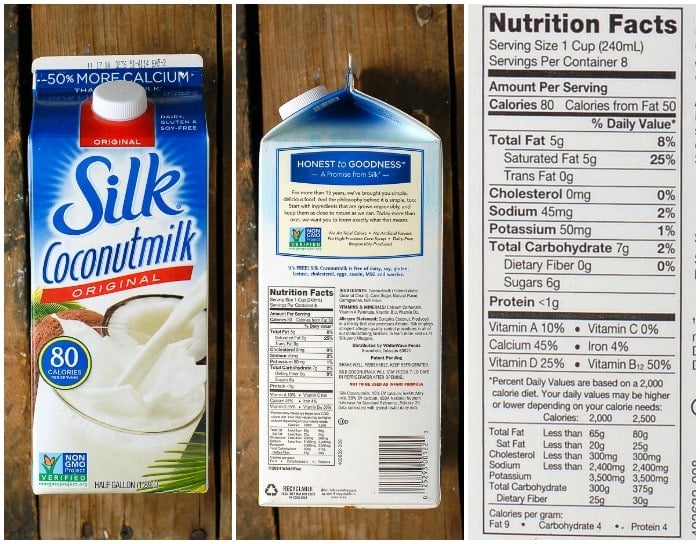
One 8oz glass of coconut milk has 80 calories, like the skim milk, but has 5g of fat all coming from saturated fat, 7 grams of carbs, and less than 1 gram of protein!!! This product is also fortified with vitamins in an attempt to up the nutirent content.


For those who are lactose intolerant and rely on milk alternatives in an attempt to get some nutrients, there is a better option! Nestle has a new milk product called FairLife. It comes in Chocolate Milk, 2% and Skim Milk, and the best part is that it is actually made from cow's milk! Now you may be thinking "why is she saying this if I can't have milk because of the lactose!" FairLife is Ultra High Pasturized Milk, meaning that it is heating to an extremely high temperature which breaks down, or denatures the lactose proteins, making it lactose free. Not only is it lactose free, but there's also 50% more protein than regular milk, half the carbohydrate content, and 30% more calcium! Let's look at the nutrient fact panel

Just like the regular skim milk, there is 80 calories, only 6g of carbohydrates, and 13g of protein!! This milk really packs a punch and is great after a tough workout.

NUTRITION FACTS

Serving Size 1 cup (240ml)
Servings Per Container About 7
Amount Per Serving
Calories 80 Calories from Fat
 % Daily Value*
Total Fat 0g0%
Saturated Fat 0g0%
Trans Fat 0g
Cholesterol 5mg2%
Sodium 120mg5%
Total Carbohydrate 6g2%
Dietary Fiber 0g0%
Sugars 6g
Protein 13g26%
Vitamin A 10% Vitamin C 0%
Calcium 40% Iron 0%
Vitamin D 25%
*Percent Daily Values are based on a 2,000 calorie diet.
Ingredients: Nonfat Ultra-Filtered Milk, Lactase Enzyme, Vitamin A Palmitate, Vitamin D3
Contains Milk. 

Now that you have all this information, it's time for you to decide what is best. You can't milk a soy bean, almond or coconut! 

Thursday, 8 December 2016

Quick Dinner Tonight!


 Displaying FullSizeRender.jpg

Trying to come up with something for dinner that the whole family will love and that is nutrient dense too? Check out this recipe! I was perusing Pinterest the other day and found this recipe. I love P.F. Chang's, especially their lettuce wraps. So when I saw that I could make them at home, I got very excited! My roommate and I headed to the grocery store after class to pick up the ingredients and get started. We are both nutrition majors, so we are both very health conscious individuals and love when we find tasty recipes that are very nutritious too! The only changes we made to this recipe was we used ground turkey instead of ground chicken, and we did not have any soy sauce (what travesty!), so we put a little extra of the hoisin and rice wine vinegar. We were going to use romaine for the wrap part of the dish, but we could not find any that did not look old. Some possible additions to the recipe could be chopped carrots or maybe some snow peas to add color. Pair it with rice and you have a balanced dinner!

PF Chang's Lettuce Wraps

Yield 4 servings                    Prep Time- 10 Minutes               Cook Time- 10 Minutes


INGREDIENTS:

  • 1 tablespoon olive oil
  • 1 pound ground chicken
  • 2 cloves garlic, minced
  • 1 onion, diced
  • 1/4 cup hoisin sauce
  • 2 tablespoons soy sauce
  • 1 tablespoon rice wine vinegar
  • 1 tablespoon freshly grated ginger
  • 1 tablespoon Sriracha, optional
  • 1 (8-ounce) can whole water chestnuts, drained and diced
  • 2 green onions, thinly sliced
  • Kosher salt and freshly ground black pepper, to taste
  • 1 head butter lettuce

DIRECTIONS:

  1. Heat olive oil in a saucepan over medium high heat. Add ground chicken and cook until browned, about 3-5 minutes, making sure to crumble the chicken as it cooks; drain excess fat.
  2. Stir in garlic, onion, hoisin sauce, soy sauce, rice wine vinegar, ginger and Sriracha until onions have become translucent, about 1-2 minutes.
  3. Stir in chestnuts and green onions until tender, about 1-2 minutes; season with salt and pepper, to taste.
  4. To serve, spoon several tablespoons of the chicken mixture into the center of a lettuce leaf, taco-style.
This recipe was obtained from damndelicious.net

Wednesday, 26 October 2016

Whats on my Plate?


Image result for couscousEver wonder what a nutrition major eats? Wonder if its healthy or if I practice what I preach? Well the answer is, I do eat nutritious foods most of the time but, I have no problem with treating myself. One thing nutrition majors hate to hear when they sit down for a meal is; "Why are you eating that? Aren't you supposed to be eating only nutritious and healthy foods and staying away from the bad things?". My response is always, "I consciously made the decision to put this food on my plate and if I want to treat myself every once in a while, then why not!"  Just because you are watching what you are eating, doesn't mean you can't treat yourself or make it so you can't have anything that tastes good.

This is what I ate for the day and the justification in the choices I made:

Breakfast (9 am)
For breakfast I had an 8 oz glass of chocolate milk, an apple and whole wheat toast with peanut butter. I chose the toast because it is whole grain and it is very important to fuel your body with carbs and protein at the beginning of the day. Whole grains contain some protein which can help you feel fuller longer and provide energy for the body to get going in the morning. The peanut butter contains protein as well, but also has healthy fats. These fats are monounsaturated and polyunsaturated. These types of fat can help lower cholesterol and reduce the risk of heart disease. I had an apple in order to get some vitamins and minerals that may be lacking from just having toast for breakfast. Apples are also high in fiber which can aid in digestion. The chocolate milk was chosen to provide 9 essential vitamins and minerals that the body cannot make and have to get from food sources, and to provide more protein in my breakfast.


Lunch (12:30 pm)
For lunch, I had the leftovers of a sandwich that I got a few days ago. However, this is an easy sandwich anyone can make and it is full of protein and nutrients. It was a hard roll with presto, which is full of healthy fats due to the olive oil and pine nuts in it, lettuce, tomato and mozzarella. The mozzarella is a great source of protein and is lower in fat than other types of cheeses. I knew I would need more than just a half a sandwich, so I paired it with carrots and honey mustard. Carrots are high in Vitamin A, K, dietary fiber, and biotin, and I added the honey mustard just to spice up my carrots a little. I had a glass of green tea with it, which has been shown to provide antioxidants to prevent illness and help boost metabolism!


Snack (2:30 pm)
 I had class all afternoon and knew that I would need something to hold me over until dinner time, so I grabbed the single serving pack of dry roasted almonds on my way out of the door. I love the way they taste and they are full of heart healthy fats and protein to keep me feeling full until dinner time.


Dinner (5:30 pm)
I was in a time crunch to get something to eat before class and going to the gym later so I decided to throw some chicken on the George Foreman Grill we have at my apartment, steamed up some broccoli, and made couscous. After the chicken was grilled and the broccoli was steamed, I threw them into a frying pan with olive oil, garlic and cheese and made a simple skillet meal with couscous as a side. Couscous is one of the 7 Mother Grains and a whole grain which are needed in a daily diet. The broccoli is full of antioxidants and vitamins, and the cheese gave me another serving of dairy and protein on my plate. Chicken is one of my favorite meats just because it is so versatile and easy to prepare. Its a really good source of protein, and a very lean meat. Milk again accompanied this meal.
Image result for couscous Image result for chicken broccoli and cheese

Post Workout Snack (10:30 pm)
After a tough workout, I was feeling a little hungry and needed a pick me up to replenish carbohydrates burned during cardio and take in protein to help me build more muscle after a weight lifting circuit. My snack included a piece of bread and a tall glass of milk. The key to post workout snacks is to have it be a 2:1 Carb to Protein ratio. Your body really needs to replenish the carbohydrate stores after burning many of them off during exercise.


This is basically what the jist of my diet is daily. It is really important to make sure that meals are balanced between carbs, protein and fat, and that you are getting vegetables and fruits in your diet to get all the vitamins and minerals needed to function in our daily lives.